Garage Floor Epoxy, Polyaspartic Coatings, Concrete Repair & Polishing
A durable garage floor depends more on preparation than on the coating: the concrete has to be clean, repaired, dry enough and properly profiled — usually by diamond grinding — before epoxy or polyaspartic goes down.
Mats and interlocking tiles are easy DIY. Coatings that require grinding need dust controls and the right equipment, and cure time depends on the product you choose.
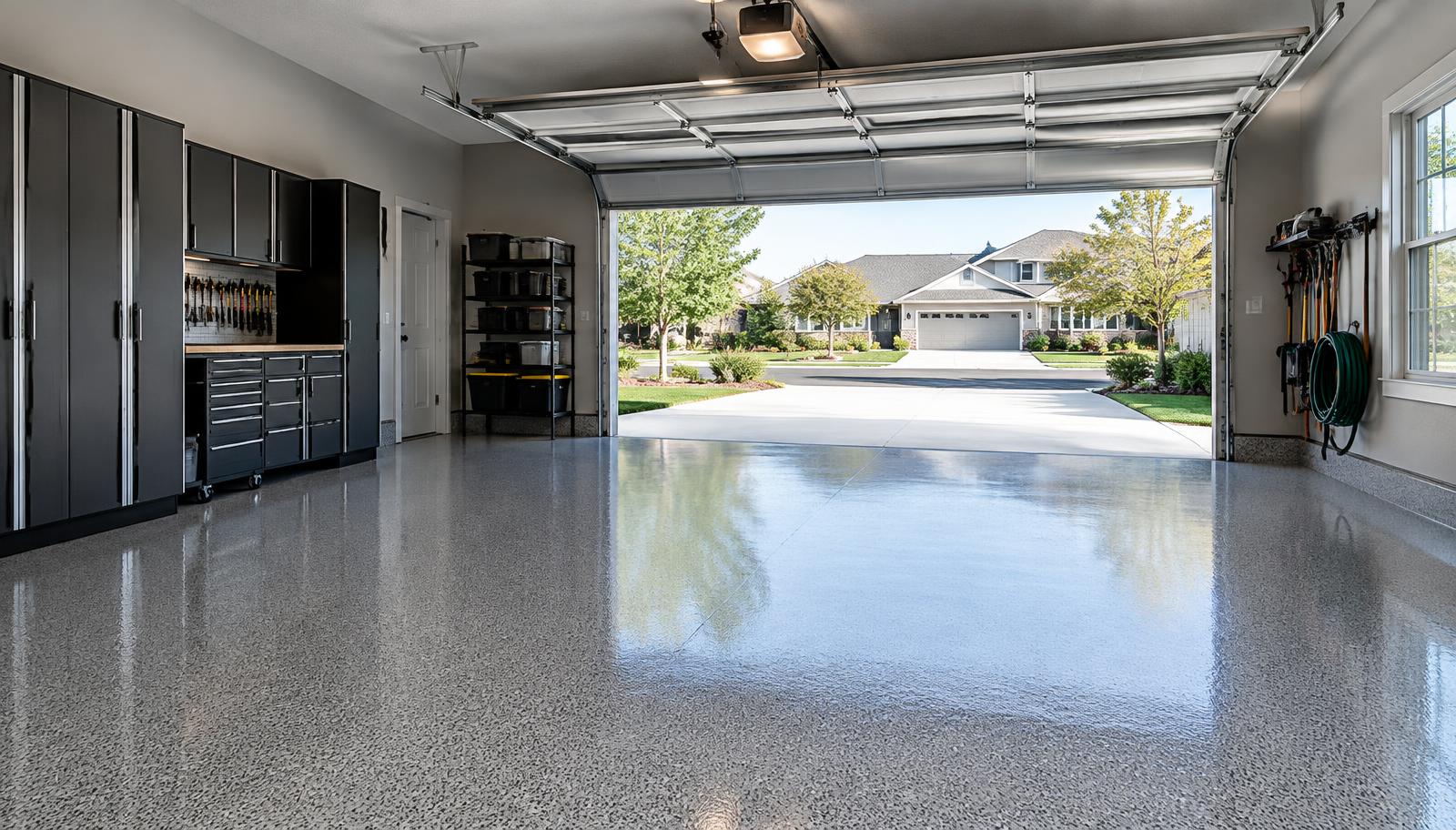
What a proper floor coating involves
- 01
Inspect the slab
Look for cracks, spalling, oil stains and existing sealers.
- 02
Test moisture
Moisture coming up through the slab is a common cause of peeling.
- 03
Repair cracks and pits
Fill and level damaged areas so they don’t telegraph through.
- 04
Profile the surface
Diamond grinding with dust extraction opens the concrete so coatings bond.
- 05
Apply the system
Base coat, optional flake, and top coat per the manufacturer’s specifications.
- 06
Respect the cure window
Foot traffic and parking times are set by the product, not the calendar.
Floor options compared
| Option | Strengths | Trade-offs |
|---|---|---|
| Epoxy | Hard, glossy, many colors | Longer cure; some products yellow in UV |
| Polyaspartic | Faster cure, UV stable | Shorter working time — usually pro-installed |
| Polished concrete | No coating to peel | Can stain; needs sealing |
| Interlocking tiles | DIY, no cure time | Seams can trap debris |
| Rubber mats | Simple, great for gyms | Not a full-floor finish |
Utah winters and deicing salt
Snowmelt and road salt sit on garage floors for months. A sealed, non-porous surface makes cleanup easier; ask about anti-slip aggregate so wet floors stay safer.
Questions to ask about any warranty
What exactly is covered (peeling, staining, hot-tire pickup)? Who backs it — the installer or the manufacturer? What maintenance is required to keep it valid?
Common mistakes
- Rolling coating onto unprepared or acid-etched-only concrete when grinding is needed.
- Skipping a moisture check.
- Parking too soon.
- Choosing a glossy finish with no anti-slip additive in a snowy climate.
Safety note: Grinding concrete creates crystalline silica dust. It must be done with dust extraction and appropriate controls — never dry-ground without protection.
Do it yourself vs. hire BRAVA
Good DIY projects
- Rubber mats
- Interlocking tiles
- Cleaning and sealing
Worth calling a pro
- Diamond grinding
- Crack repair
- Epoxy and polyaspartic systems
Want your garage organized or updated without spending the weekend figuring it out? BRAVA can help you plan the work, choose materials and request a clear written estimate.
Frequently asked questions
- Can a garage floor be coated in one day?
- Some fast-cure systems allow it under the right conditions, but not every slab or product. Your written quote states the real schedule.
- Epoxy or polyaspartic?
- Polyaspartic cures faster and resists UV; epoxy is often thicker and slower. Many systems combine both.
- Why do coatings peel?
- Usually poor surface preparation, moisture in the slab, or hot-tire pickup on thin coatings.
- Can you fix cracks before coating?
- Yes — crack repair is part of preparation. Structural cracks need a different assessment.
- How much does a garage floor coating cost?
- It depends on size, slab condition and the system. Use the garage estimator or request a written quote.
Related garage guides
Garage projects near you
Helpful outside resources
Independent resources; no partnership or endorsement implied.